
Being Ordered by Time
Ethika Politika needs $25,000 to continue publishing through the first half of 2016. Please make a tax-deductible donation today.
A few weeks ago, as I trudged to campus at 5:45 a.m. for my early morning study group, (college students meet at even these hours when exams are on the horizon), a friend and fellow member of the study group offered to give me a ride to campus. As I hopped into his car, I caught sight of a brightly colored rectangular box. When I asked him why he was driving around my neighborhood at this hour, he replied, “It’s the Immaculate Conception, and we’re celebrating with Dunkin’ Donuts!”
Even with the fog of early morning still clouding my mind, I smiled at my friend’s festive spirit. At the same time, it struck me that I had no idea how to commemorate a feast day if it wasn’t Christmas or Easter. I knew that a wide variety of feast days were observed sumptuously in the past, but I was at a loss for the Immaculate Conception.
There was also my friend’s simple awareness that this was a day to celebrate: I had rarely thought that a particular day should alone cause me to pause and reflect, let alone go out and buy a box of sprinkled doughnuts (one of which I recall was blue, fittingly enough). I am a workaholic: days are stretches of time that I fill as I like. My friend’s attitude towards time challenged this.
This past Christmas break, I observed my seasonal tradition of reading Truman Capote’s A Christmas Memory, the story of the author’s childhood Christmas traditions with his aunt Sook Faulk. One of the great lines is Sook Faulk—feeling the chill in the November air and seeing her breath fog the windows—announcing “‘It’s fruitcake weather!’”
“Fruitcake weather” sends Sook and Capote, or “Buddy,” as she calls him, into a flurry of baking, mailing cakes to friends far and wide, finding the perfect Christmas tree in a faraway wood, and crafting gifts for one another. Sook has a keen awareness of her present moment. The time of year itself moves her and her nephew to observe traditions that celebrate the particular season they are experiencing.
Letting Time Order Me
When it comes to organizing my time, I have two options: I can order time for myself or I can let time order me. I can force myself to use the time that I have to its “best use,” or I can let the time I am given move me. What I have come to like about the latter way of doing things—especially by honoring a Sunday or a feast day—is that it reminds me that the day has a value beyond what I accomplish in it.
I have cultivated this sensibility towards time only after living for a long period with a very different one: I would spend hours working until I was weary because I thought it would make me happy to be as productive as possible. Yet I only felt anxious and unaccomplished. From now on, instead of just asking myself whether I have done all that I wanted to do in a given day, I also want to ask myself whether I have attended to “what” or “who” has needed my attention that day, and whether I have focused on the present moment.
One challenge to a better ethic of time is the ability to take our work with us wherever we go. As a student, this takes a toll. It also robs time of some of its originality. We can blur the distinction between morning, noon, and night because all three can all be filled with work or entertainment of any kind we choose. Even the phrase, “spending time,” reveals who, between our time and ourselves, is the boss.
While it is not bad to be driven, I find it very easy to pursue one goal single-mindedly and drive out considerations of other things, including the call to celebrate or rest on Sundays and feast days. Sometimes my doggedness to finish a task can even lead to ridiculous uses of time: picture a frantic student trying to read the Nicomachean Ethics while waiting in line at a noisy and packed airport, desperately hoping to re-book a cancelled flight. That was me last Christmas.
Honoring Time
Growing up, I used to hear the phrase “live the present moment” fairly often. After a while, the words lost their meaning for me. It was only in my first year of college when I realized, to my horror, that I had developed a habit of planning every fifteen-minute block of my day (I gave myself twenty minutes for lunch), that it occurred to me I had gone too far with my love of productivity. Time was putty in my hands, and I had deprived the present of its spark.
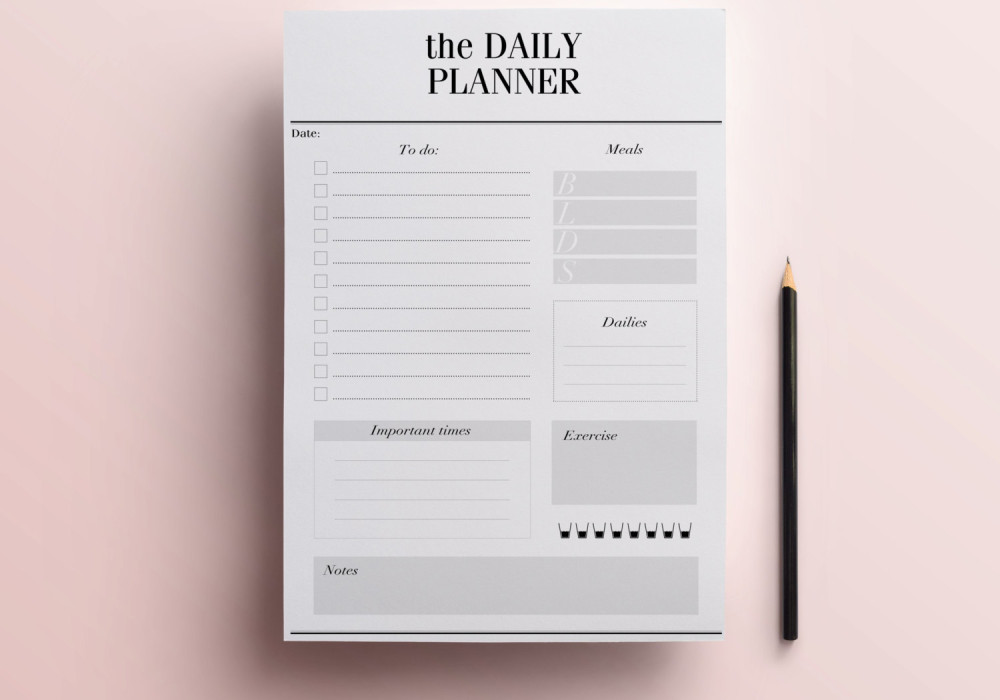
I still struggle to order my time rightly. Sundays and holy days pull me out of my own frenetic stream of plans, and my own drive to produce, and remind me to pay homage to something far more worthy of praise—and a box of Dunkin Donuts—than the glossy pink planner on my desk.