men-standing-police-line-baltimore

Letters

Squaring Same-Sex Marriage and Baltimore

David Russell Mosley
By David Russell Mosley | May 1, 2015

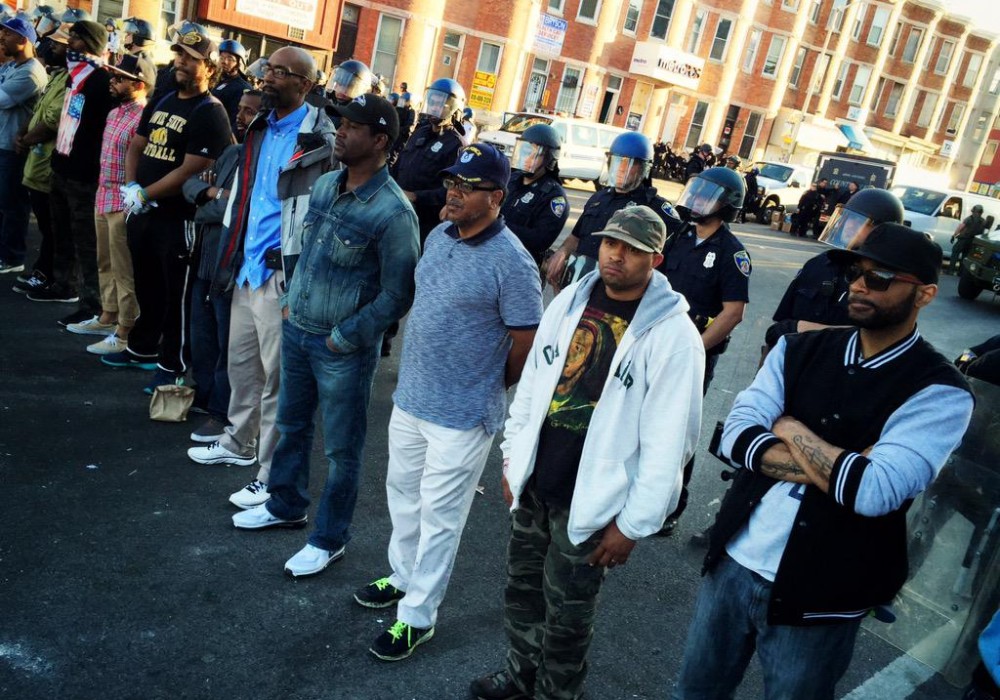
On 28 April 2015, President Obama made some frank remarks concerning the recent events in Baltimore surrounding the death of Freddie Gray. I was not in Baltimore when this happened; I am white and cannot presently understand what it is to be black; I cannot understand what it means to be profiled by the society in which I live. These things need to be said when I, as an outsider, comment on events such as these.

However, the president made an interesting remark. He said, “it’s more likely that those kids end up in jail or dead than that they go to college, in communities where there are no fathers who can provide guidance to the young men.”

Now I agree with the president here. This isn’t simply a problem in the black community, it is a rampant problem in many lower income and impoverished communities. Whether due to incarceration, death, being unmarried, or any other number of circumstances, these communities, so the president acknowledges, see a high incidence of children born into families without fathers. I share the president’s grief on this matter and wish to see the societal changes necessary to overcome and fix this issue.

Yet here is my question, are fathers inherently important? Do children need fathers—and mothers—in their lives? If so, don’t recent attempts to normalise and legalise same-sex marriage, with the attendant right to offspring, mean that there will be children born without a father—or a mother?

How do we square these two issues, the need for fathers—and mothers—and the desire to legalize and normalize same-sex marriage? Can we? Should we?


Print Friendly
  • http://seeinfra.wordpress.com K.Chen

    “Yet here is my question, are fathers inherently important?”

    Sort of. Adequate fatherhood is important. Non-zero fatherhood is not, because some fatherhood is deleterious compared to absence.

    “Do children need fathers—and mothers—in their lives? ”
    See above - and it’s worth pointing out here that what we mean by “father” and “mother” and the roles of parents and those we accept as stepping in in loco parentis has shifted over time. We might consider the father to be the primary male with custodial responsibility; most often the biological male progenitor, but often not.

    This also brings up the issue of, if one father is good, isn’t two fathers better? If the assumption is you need two opposite gender parents, wouldn’t four due to divorce and remarriage be even better?

    “If so, don’t recent attempts to normalise and legalise same-sex marriage, with the attendant right to offspring, mean that there will be children born without a father—or a mother?”

    No. This assumes that the people having a same-sex marriages (1) would have had a child producing opposite sex marriage [also the question of the political, ethical and moral costs of the closet is raised here if it is true] combined with (2) such persons, denied same sex marriage, would not simply produce children singly (3) the structure of a same-sex marriage precludes either mothers or fathers. If you mean in the the strictest biological sense, male and female gametes are an integral part of the process and you get nowhere. If you mean in the commonly accepted social understandings of parenthood, parenthood can be adopted or proxied, which I am almost certain many same-sex child raising couples do, in and outside of civil marriage structures.

    Further consider that if we affirm this question, we must logically raise the possibility that all adoption and surrogacy is also a threat to children having fathers and mothers. Most people would find that counter intuitive.

    Alternatively, you can argue, ala David Blakenhorn, that normalizing same-sex marriages erodes one of the traditional functions of marriage, which was to take recalcitrant impregnating men and turn them into fathers. The mechanism for this has always been somewhat vague, and all available evidence over many years of experimentation points towards an increasing relationship between marriage, family and children, in sofar as many of the couples seeking a same sex marriage are doing it with the goal of creating a normalized, bourgeois child(ren) raising unit.

    I think these are perfectly legitimate questions to ask, but they have been asked, and they have been answered. Repeatedly. Same sex marriage / gay marriage / marriage equality did not just suddenly appear out of the ether yesterday. There have been on the ground tests.They are “recent” in the sense that the modern period started recently, not recent in the sense that its a data free experiment.

  • NDaniels

    Recent, in that we have always recognized that human persons exist in relationship as sons, daughters, brothers, sisters, husbands, wives, fathers, mothers; reordering human persons according to sexual desire/inclination/orientation, which sexually objectifies the human person is recent in that this would be giving a separate personhood to sexual desire.

  • http://seeinfra.wordpress.com K.Chen

    Facts not in evidence. And depending on your time line we also have “always” ordered each other on these relationships as well: Masters, servants, commoner, nobility, other class, lineage, legitmacy, bloodline, clanline, owner, slave, concubine, serf, inferior, superior, chief, follower. Family is a culturally sensitive concept to say the least, and interacts with all of those things in different ways.

  • NDaniels

    It is a fact, that regardless of ancestry or status, from the moment of conception, persons are, in essence, sons and daughters, and if they have siblings, brothers and sisters, and if they marry, husbands and wives, and if they have children, fathers and mothers.
    Creating a separate personhood based upon sexual desire/inclination/orientation, sexually objectifies the human person, demeans our inherent Dignity, and is a violation of our Liberty.

  • http://seeinfra.wordpress.com K.Chen

    I’ll stipulate for the time being that “creating a sepetate personhood” is what is going on and that it is (not sure how it is a violation of Liberty or Dignity, but who knows what those capitals signify).

    None of that or the rest of your response supports your contention that we have always been a particular bounded set of relationships.

    Nor have you adressed the criticism I’ve presented about the other equally ancient relationships. What distinguishes your bounded set from the ones I’ve presented?

    And, I assume you are against adoption ad a violation of Liberty and Dignity as it creates a new personhood seperate from the biological relationship you’ve stated?

  • NDaniels

    Creating a separate personhood based upon sexual desire/inclination/orientation, sexually objectifies the human person; persons are not a means to an end.
    Through adoption we become adopted sons and daughters.

  • http://seeinfra.wordpress.com K.Chen

    Why doesn’t adoption create a means, object relationship between adopted child and adoptive parent? Is not the adopter, free from biological imperative, simply fulfilling desire? Is not the adoptee objectifying the parent as a source to fulfill physical and emotional needs?

  • NDaniels

    Surely you are not trying to equate adoption with a desire to reorder persons according to sexual desire/inclination/orientation, which sexually objectifies the human person and is a violation of God’s Commandment regarding lust and the sin of adultery?

  • http://seeinfra.wordpress.com K.Chen

    No, I’m pointing out that by logical implication you are.

    Unless you’re saying that sexual objectification, persons as sexual means is somehow a special case while all other objectification is not. (Say, wanting their stuff) You may also wish to consider that all of the relationships you listed are explicitly gendered; that is sexed.

    If you’re going to stand on (your limited understanding of) God’s word for that you might as well simply say that God’s word declares you right directly. I have no interest in a theological debate on this issue; well qualified thinkers have got that end of it handled.

    And please note, I am rapidly running out of patience with you dodging my questions in favor of repeating a catchphrase. I’ve been willing to let you use me as someone to speak at and not with, but that forebearance is coming to an end.

  • NDaniels

    I think it only logical to assume that by touching reply, I am speaking with you, although others are free to listen or join in the conversation. Identifying a person as a son, daughter, brother, sister, husband, wife, father, mother, does not sexually objectify the human person and thus does not demean our Dignity as human persons. I agree that there are other ways that persons can be objectified such as in the case of slavery and abortion, which denies the fact that from the moment of conception, every son or daughter of a human person, is in fact, a human person, not a place or a thing.

  • http://seeinfra.wordpress.com K.Chen

    Does nonsexual objectification cause unnacceptable harm in your opinion?

  • NDaniels

    Love is not possessive, nor is it coercive, nor does it serve to manipulate for the sake of self-gratification.

  • http://seeinfra.wordpress.com K.Chen

    Is that a no?

  • NDaniels

    Objects can be used as a form of idolization, certainly it is possible to covet objects but that is different than coveting human beings.
    Human beings should never be viewed as a means to an end, or an end in themselves; human persons were created to live in Loving relationship in communion with The Ordered Communion of Perfect Love, The Blessed Trinity.

  • http://seeinfra.wordpress.com K.Chen

    Is that a yes?

  • NDaniels

    Your question does not warrant a yes or no answer but rather requires clarification. It is possible to covet objects, but the use of an object does not mean one is coveting that particular object.

  • http://seeinfra.wordpress.com K.Chen

    Not what I asked. Do you or do you not believe that nonsexual objectification causes unacceptable harm?

  • NDaniels

    Again, your question is not clear, how do you define non sexual objectification? I assume you would view slavery and abortion to be examples of objectification of the human person that is not based upon sexual desire/inclination/orientation, but on denying that a particular person is a son or daughter of a human person, not a human thing. If this is not what you meant, could you please clarify?

  • http://seeinfra.wordpress.com K.Chen

    Ok, how do you define sexual objectification?