
Little Lion Man

If you missed my last piece, “Lose Your Passion,” Benjamin Carpenter made an excellent point in the comments concerning my argument there. I want to take up Carpenter’s remarks here.
I recommend reading the whole of them, but for those of you who are against new tabs (don’t be against new tabs), I take note of a few of his key points:
I feel as if there is a strong connection between the idealism of ‘passion’ and the romantic. There seems to be no ‘day-to-day’ for a romantic, only an idea which exists in the self-centered mind … the romantic believes in a ‘passion’, I guess, that he cannot accept the day to day monotony and maybe even believes that it doesn’t exist, and he chooses his own suffering. Everything is mental, of course … He is constantly creating realities in which he is recognized for his suffering. Ultimately, this is severe narcissism and an almost erotic desire for esteem and greatness. Not honor, but fame, it seems … Without actually putting ourselves into the mix and giving a helping hand, the self-pointing self will step wholeheartedly into a picturesque world where suffering makes him awesome, and manly, and recognized … One could assume that as a vision of great suffering: “the melancholic and horrible reality which is suffering, oh woe (and great) is me for dealing with the harshness (or boredom) of it.”
Of course the ‘Choose Your Own Suffering’ character is nothing new; you will find a paragon of such a character, for example, in Sorrows of Young Werther. But if man desires to be happy, why choose to suffer? I’m not talking about clinical depression, but those who really desire to suffer, to wear their wounds, even to themselves, as a badge of honor. Why is there a temptation to make the idol and centerpiece of your life something that truly frustrates your ability to express joy?
Most intriguing to me was Carpenter’s point that when this disposition is not tempered by an engagement with the eternal world, “the self-pointing self will step wholeheartedly into a picturesque world where suffering makes him awesome, manly, and recognized.” Carpenter is picking up on a particular species of the character that Simone de Beauvoir, in her Ethics of Ambiguity, calls ‘the passionate man’ and describes in the following terms:
What characterizes the passionate man is that he sets up the object as absolute, not, like serious man, as a thing detached from himself, but as a thing disclosed by his subjectivity.
In laymen’s terms, de Beauvoir understands the generally passionate man as actualizing the world; he negates that non-being of things by his will and roots the actuality of the world in his own mind. I suspect that this appears to be the case if one watches the artist for whom only his work exists or the lover for whom only his beloved has value. Continues de Beauvoir:
Real passion asserts the subjectivity of its involvement. In amorous passion particularly, one does not want the beloved being to be admired objectively, one prefers to think her unknown, unrecognized; the lover thinks that his appropriation of her is greater if he is alone in revealing in her worth. That is the genuine thing offered by all passion. The moment of subjectivity therein vividly asserts itself, in its positive form, in a movement towards the object.
Now, I would hardly consider myself an existential nihilist; rather I turn to de Beauvoir’s description because she has captured the philosophical and underlying assumptions of much of our current understanding of passion. [1]
The idealism of the passionate romantic, ultimately, refuses to accept the monotony that at times characterizes all of our lives: By refusing to see that as existence, he creates a world in which he has been grossly wronged. In that world of his own making, he ultimately denies the meaning of the world in the things external to him; after stripping them bare of intrinsic meaning, he is then free to infuse them with the content he desires. Then, they become like the beloved whom de Beauvoir describes (above): seen in her true contingent being as only meaningful to the passionate one. When this object—so infused with meaning as to transcend every other object, and to function as the gravitational center of the passionate romantic’s life—is the romantic’s “suffering,” the romantic becomes reciprocally infused with meaning as one who suffers.
This is the foundation of Carpenter’s point about the necessarily narcissistic/erotic desire for fame. As the passionate romantic is the only observer of this—the one who truly knows his pain—he himself is the only audience he needs. In the world of his creation, he has made himself a god, with the renown appropriated to such a status.
Now, very few people actively seek to become that sort of individual. Even people who display these characteristics predominantly (and we all do from time to time, I suspect) do not typically actively choose such an attitude. Rather, I suspect it is many small choices of selfishness and a particular, normative cultural assumption that result in such a tragedy.
When we speak of passion, much of our cultural speech surrounding it recalls de Beauvoir’s description. (For the record, she was not lauding that as the best way of being human. Her response would be a greater descent into nihilism). It’s a twisted take on Pygmalion; the things outside us are suspect at best, and so they only have being as we decide to infuse such into them. When our experiential existence, our pain, our sorrows, that which wounds us, become the object of our godlike gaze, we limn a reality that is utterly internal. We become, essentially, trapped in a prison of our own making, and reign in that prison as the god we know ourselves to be.
If poetry indicates the trajectory of emotions and the interior landscape of a culture, I believe music gives us decent evidence that the navel-gazing passionate romantic is a common character. I suspect that most of us could name books, songs, TV shows, and movies that depict this character. If you have never seen it before, the male protagonists in most of Ruby Sparks, (500) Days of Summer, Don Jon, and the female protagonist in Young Adult offer a pretty good sketch of what I am talking about. In its ultimate extreme, we culturally critique this sort of character as requiring change, although more often we offer that salvation not through a redemptive understanding of pain, but through the all-healing glow of romantic/erotic love.
Why would we want to live this way? Why would someone want to divinize themselves precisely in their suffering? Because sometimes life hurts. Sometimes life is hard. Beyond that, sometimes we observe the utter harshness and boredom of life and hope that this can’t be the totality of what is before us. For most of us, suffering well is hard, even while understanding its redemptive aspects. For those who lack a comprehensive articulation and internal possession of redemptive suffering, it becomes harder to find meaning. One solution, then, is to create for ourselves a world in which it does; a world in which we are the hero; a world in which we can create a worth for ourselves that the external world denies us. A train of thought that I will derail with the words of the poet The Postal Service: “I feel I must interject here, you’re getting carried away with these revisions and gaps in history.”
This is why I think it is utterly essential for all folks whose vocation does not immediately force them outside of themselves to make the effort to serve others. Serve others, with grace in your heart and flowers in your hair. Recognize their needs, their experience, their suffering, their worth. This other-directed love reminds us that we are, in fact, intrinsically members of a community that exceeds our individuality. That there are people who need us more than we need ourselves. That we can and ought to do good for them. We eradicate selfishness not by willing it to be so, but by beginning to focus less on self and more on the world outside us.
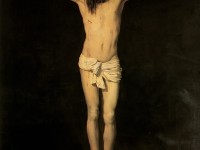
One of the most striking passages of Scripture, which provides a good model for emulation, is this: “And the Word became Flesh, and dwelt among us.” God, perfectly sustainable in His own Trinity poured forth in the act of creation, and then in an absolutely radical manner in the event of Redemption, where He held nothing back. As His Church, it is our most fundamental vocation to turn to others with this radical and sacrificial love.
[1] A quick aside on de Beauvoir’s epistemological position: She held to Sartre’s existential nihilism, which she argues is founded on the philosophical development of Hegel. Of the latter, it is probably important to note that he was really into this idea of “the negation of the negation.” Basically, one negates an object once, and then through a secondary negation of the first negation one brings forth positive content. Such ties into the self-actualization of the Zeitgeist, or ‘World Spirit’ as I like to translate it. Ultimately this thought was highly influential in modern/post-modern thought, and can be seen underpinning philosophical movements like Marxism, feminism as some intellectuals of de Beauvoir’s strain understood it, and liberation theology. I would argue it is necessarily dehumanizing.