dolan-interview

Against ‘Virtuous Capitalism’

Jose A. Zeron
By | June 11, 2014

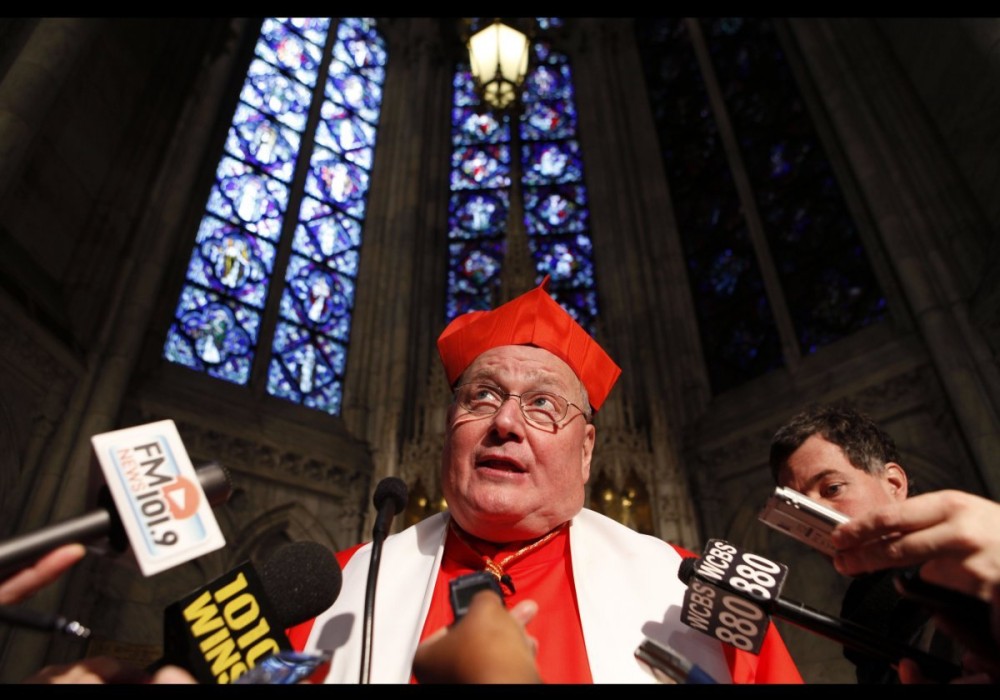
For those of us who closely follow the pronouncements of Church officials on economic issues, it has never been surprising to find that expertise is generally lacking. But even when the quality of the commentary leaves much to be desired, how do we respond to open and seemingly deep-seated disagreement between two princes of the Church? To be sure, there isn’t much in common between Cardinal Dolan’s defense of “virtuous capitalism” and the structural critique advanced by Cardinal Rodriguez.

In his piece in the Wall Street Journal, Dolan confidently tells us that “[t]he Church has long taught that the value in any economic system rests on the personal virtue of […] individuals […] and the morality of their day-to-day decisions.” Thus, he says, a capitalist economy is perfectly compatible with Catholic teaching (and avoids the brunt of the Pope’s recent criticisms) so long as it is practiced by virtuous people and in a virtuous way.

The problem with the notion of “virtuous capitalism” is that it sees the free-market economy, at its best, as rewarding virtuous action and, at its worst, as a neutral stage to be occupied by principled players appropriately incubated in so-called “pre-political” institutions. Except that, really, the opposite is true. For all its accidental goods (and there are many, as even Marx admitted), capitalism provides perverse incentives that—systematically—lead to the poor being treated as an afterthought. Virtue is implicitly discouraged, for success within the capitalist system depends mainly on two factors: how selfish one is willing to be with one’s time and treasure and how much one can pay a consulting company to figure out the wholly impersonal and mostly inscrutable forces that dominate global markets.

The fact remains that, as Cardinal Rodriguez said in his speech at Catholic University of America, the least fortunate have a claim on the wealth of our societies by virtue of their very existence among us. Not giving them their due portion is the same as stealing it from them. And by taking advantage of their cheap labor but otherwise ignoring them, the current system does precisely this. Furthermore, Rodriguez is right to be concerned that Catholics have become accustomed to a status quo in which our lives (like those of everybody else) are so fragmented that most of us cannot even imagine fashioning a structural alternative to capitalism that is faithful to the Church’s social teaching.

Regulating capitalism, as we do today, might mitigate the intensity of its debased incentives, but it leaves its worst outcomes untouched. That is, no kind of regulation will be able to address the continued breakup of communities and the estrangement of their members; or the fact that advancement in the capitalist system is based on greed and self-regard. And for as long as we continue to see goods being distributed not to those who need them but more often to those who already have enough, we will know that capitalism is in good shape.

We would do well, therefore, to keep in mind Steve Randy Waldman’s admonition: “It is naive to imagine that operating in ways rewarded by existing market arrangements will be sufficient to reshape those arrangements in ways likely to harm those doling out the rewards…[T]o redirect [the control of markets], a bit of hardscrabble, old-fashioned fighting might be necessary.”

Editor’s note: This article is part of a series on “virtuous capitalism” designed to explore the topic in 500 words or less. The entire series may be found here.

Print Friendly
  • rjfarel

    Zeron’s argument contradicts itself. Not giving the least fortunate their due would not be virtuous. Zeron seems to be advancing the statist argument that only government can provide a just outcome. Free persons operating in a free market are capable of acting justly on their own.

  • Mattias A Caro

    I would like to see a bit more wrestling with the combined term “virtuous capitalism”—it is a central claim of Adam Smith that a capitalist system does indeed promote virtues. But there needs to be a critical discussion of what those virtues are exactly. Kudlow (via Dolan) et al. are essentially playing the Adam Smith card, which deserves the examination, especially from a Thomistic perspective on virtue. Not that that hasn’t been done, but that’s where the conversation seems to be now.

  • Dan Hugger

    It would have been nice if this article presented an argument rather than a series of assertions.

  • Robert

    I wish a discussion on Catholic economics would make more references to the guilds, the Just Price, and usury-to the historical experience of Christendom and an authentic interpretation of the papal social encyclicals. Instead we’re treated to an unproductive bouncing back and forth between liberal capitalist and Marxist talking points.

  • John Médaille

    I’m pretty sure that wasn’t Smith’s claim; in fact it was the opposite. Smith believed that businessmen couldn’t get together even for social purposes without it resulting in a conspiracy against the public. Indeed, he thought ‘profit’ worked against the common good: “But the rate of profit does not, like rent and wages, rise with the prosperity, and fall with the declension of the society. On the contrary, it is naturally low in rich, and high in poor countries, and it is always highest in the countries which are going fastest to ruin. The interest of this third order, therefore, has not the same connection with the general interest of the society as that of the other two. “

  • Michael Sullivan

    Is this a serious post?

    Mr. Zeron you might want to start a business, or take a business owner, or entrepreneur to lunch to find out just how selfish these folks are. Your comments betray a purely theoretical abstraction that bears very little to the reality you think you are describing.

    Why don’t you rent “It’s a Wonderful Life,” grab a copy of Artistotle’s Ethics, and read “It Didn’t Have to Be This Way” by Harry Veryser - a virtuous business owner and economist who is also Catholic.

    http://www.amazon.com/Didnt-Have-This-Way-Unnecessary/dp/1935191071

    What makes you think that the “selfishness” of capitalists can be stemmed by the work of the State? Where are you going to find the angels in government to manage your structural alternative (which you don’t describe).

    I also find it chilling that you are effectively supporting violence to bring about the restructuring of society.

    Is this the kind of thinking being advanced in this forum?

  • Michael Sullivan

    Robert, guilds were voluntary associations, which effectively acted as monoplies. It is open to debate how positive these organizations were for innovation and openness to new members, etc. But for sake of argument, what market-state arrangement supports voluntary associations? A free market more so than State control of the market.

    The issue of a Just Price, is really the question of the agreed upon price between a buyer and seller. What economic system produces greater value with ever falling prices? The free market.

    Usury perhaps is the greatest problem we have today, especially if you consider the modern monetary and banking system being effectively a usury system. This is an issue that all Catholics should rally around and frankly, it would be more helpful if the Pope and Cardinal Maradiaga were to address the immorality and injustness of the monetary system.

  • John Médaille

    Well, I’m a businessmen, and I know that capitalism cannot exist without the state, was created by the state, and sustained by the state, and that big business and big states grow hand in hand. That’s the historical reality and there are no exceptions to that rule. Rather than being opposed to big gov’t, capitalism is dependent upon it. You cannot get rid of big gov’t without getting rid of capitalism.

  • Michael Sullivan

    I generally don’t like using the term capitalism because of its pedigree and it is vague and prone to misunderstanding.

    When we talk about a business economy, open markets, private property, voluntary association, defense of contracts, the positive role of innovation, the rule of law, the importance and goodness of work these are worth defending and in this kind of environment virtue is naturally rewarded and further it is an economic ecology dependent upon a culture of trust.

    This isn’t dependent upon “big” government, although it requires a juridical framework to defend these goods from theft, fraud, etc.

    Christians are called to exercise their freedom in this kind of economic ecology to transform society. This is where virtuous capitalism comes in.

    Examples are the Economy of Communion (Focolare), social enterprises like Home Boy Industries, Business as Mission (BAM), the Transformation Entrepreneur’s Institute that seeks to form entrepreneurs to end systemic poverty. Each of these are examples of Christians responding to their call to business and being innovative in a market economy to transform the meaning of work and the ends of profit in accord with the Kingdom.

    I think an exploration of these innovators is much more fruitful than this kind of short commentary which is based on abstractions and the illusion that we can come up with a restructuring of the economy by moral abstractions and through violent uprising.

    I think it is insulting to imply that you as a businessman are only successful in this economy because you are selfish with your time and treasure. It is preposterous and shallow.

  • John Médaille

    But can any of these examples be called “capitalism”? You eschew the term, but then you use it again, so I am confused. Why keep the term at all?

  • Michael Sullivan

    I used the phrase “virtuous capitalism” because it is the focus of this commentary and the examples offered are what, I think, Cardinal Dolan has in his mind when using this phrase.

    Generally speaking, the specific content of what I listed as a business economy is what most people in our society take to mean by “capitalism,” outside of the mostly Catholic circles that read your books and Fanfani, et al.

    I think it is a waste of time to try to get everyone to agree on a minority definition of capitalism, and then condemn it, before holding up virtuous and innovative examples of an humane economy in business and in action.

    Is it really fruitful to argue that these are not examples of capitalism in action or “virtuous capitalism?”

    Perhaps it is more fruitful to speak of “crony capitalism” to address the corrupt collusion of big business and big government, rather than trying to get the whole world to agree on your definition of capitalism.

    St. John Paul was a genius at appropriating language in a way that advanced our principles rather than set us against an ideological block. “New Feminism” is an example. Perhaps he should have coined the phrase “New Capitalism” in calling for a humane economy, rather than just suggesting alternative language such as the “enterprise economy.”

    In short, the use of the unmodified term “capitalism” is vague and unhelpful.

  • Andrew

    A just price isn’t simply a price that has been agreed upon by buyer and seller, unless we assume that no one would ever agree to an unjust price. I think that’s a bad assumption.
    I have a hard time seeing how greater value and ever falling prices have been created by our “free market” system. For one thing, prices on many things continue to rise. Secondly, what has greater value, goods made with real craftsmanship or shoddy mass produced junk? It certainly seems like the former have become rarer and the latter overwhelmingly more prevalent.
    If the “Western free market economy” is such a success why do we borrow so much money from the communist Chinese?
    I agree that usury is one of the major problems of our times and also hope to hear more Catholics speak out against it. Without usury and contraception (with abortion as a backup) our economy would be radically changed.

  • Michael Sullivan

    Andrew, I completely agree about contraception and our money system. In fact, I think these two seemingly unrelated issues are connected. But let’s make some distinctions.

    If I come to you with something you want, say a bike, we negotiate on a price that we BOTH can agree on,or there isn’t a “meeting of the minds” and there is no sale. However, when we do agree on a price, that price reflects a win-win relationship. You value the bike, more than the money you agree to pay me for it, and I value the money more than the bike that I’m willing to exchange it for. When we finish the transaction, both are enriched by the exchange, so what can we say about this price? Is it “just”? If we assume there is no fraud, deceit or coercion, then the price is just and further, it is really a nugget of information that reflects the assessment of two people coming together and their agreed upon ideas about the value of this bike.

    The issue of quality of goods is not absolute. Falling prices and higher quality is a function of innovation in production, so that more value is produced with less inputs. A handcrafted anything is going to cost more than something that is produced by a robot because of the costs of production, but that also means that more people will be able to have access to a good created by a robot than created by a handcraftsman.

    There is a book publisher in Germany called Steidl. Everything is done by hand, they have one press, the books he produces are in limited runs, and they become collector’s items. It is massively expensive to publish with him, his books are very expensive and they become works of art themselves that become collector’s items that grow in value because they are rare and buyers who can pay a high price for a book, will pay to get one that no one else has. His clients tend to be artists who have a client base that warrant this level of high quality. Now, if we required that all book publishers work like Steidl, and every book costs several hundred dollars, then the majority of people would not have access to books. The innovations in mass publishing is what makes it possible that the works of Shakespeare can be in the hands of almost anyone who wants them.

    So there naturally is going to be a trade off between the highest quality possible for a good and lower costs, but for some goods like books, it is not necessary for every book to be like a Steidl. But in the cell phone industry where innovation and quality are key drivers of customer interest, we have consistently seen higher quality and innovation and lower prices.

    Finally, the principles of a free market necessitate a solid independent currency for money. This is why our Founding Fathers set forth our currency to be in gold and silver only. The debasement of our currency is not a feature of the free market, it is a feature of Government manipulation and interference in the free market for the purposes of building power. Printing fiat currency means governments can expand wars and welfare and pay for it through inflation (i.e. stealing value from the dollar, so that the dollars we earn loss their value once we earn them - this is the GREAT INJUSTICE!). So governments run up deficits and then go to countries like China for loans. This is not a free market, this is government intervention to enslave the people.

  • Dcn Joseph Bernard Gorini

    In my thinking, is one is serious about this topic, then one should study the content of the website for the Center for Economic and Social Justice (www.cesj.org) wherein sound principles (phiosophical, theological, social, political, and economic) are applied objectively and effectively - i.e., without pollution or distortion.

  • Huol

    It’s sad how none of the commmentators address the fact that the structures and practices of modern capitalism are antithetical to orthodox Catholic social teaching…

  • Huol

    I think you’re missing the point of the article. The author is highlighting how untenable modern capitalism if you believe in Catholic social teaching.

    Sure you may cherry pick a few examples of “virtuous” capitalism, but by in large, the very structure and ethos of capitalism marginalizes the poor, which is goes against one of the fundamental tenets of Catholic social teaching.

    The authors is asking, perhaps there may be a better economic system that follows Catholic social teaching than modern capitalism.

  • jkaps

    Can I get a amen up in here????

  • George M

    AMEN BROTHER!

  • Michael Sullivan

    Huol, the author of this post makes a lot of abstract assertions which reveal a lack of real understanding about economics and business, and frankly Catholic Social Teaching.

    As stated above, “capitalism” is a vague word that needs clarification. But when clarified, as JP II does in the following quote, it is clear that it is compatible with CST. Further, it is the work and example of men and woman who are virtuous, holy and supernatural in their lives that transform culture that then transform structures. Too often on the political left, Catholics think that a better society can be created through political organizing, or “fighting” as it is invoked above, to change structures without personal and cultural transformation in Christ. CST calls for integral transformation in Christ.

    42. Returning now to the initial question: can it perhaps be said that, after the failure of Communism, capitalism is the victorious social system, and that capitalism should be the goal of the countries now making efforts to rebuild their economy and society? Is this the model which ought to be proposed to the countries of the Third World which are searching for the path to true economic and civil progress?

    The answer is obviously complex. If by “capitalism” is meant an economic system which recognizes the fundamental and positive role of business, the market, private property and the resulting responsibility for the means of production, as well as free human creativity in the economic sector, then the answer is certainly in the affirmative, even though it would perhaps be more appropriate to speak of a “business economy”, “market economy” or simply “free economy”. But if by “capitalism” is meant a system in which freedom in the economic sector is not circumscribed within a strong juridical framework which places it at the service of human freedom in its totality, and which sees it as a particular aspect of that freedom, the core of which is ethical and religious, then the reply is certainly negative.

    The Marxist solution has failed, but the realities of marginalization and exploitation remain in the world, especially the Third World, as does the reality of human alienation, especially in the more advanced countries. Against these phenomena the Church strongly raises her voice. Vast multitudes are still living in conditions of great material and moral poverty. The collapse of the Communist system in so many countries certainly removes an obstacle to facing these problems in an appropriate and realistic way, but it is not enough to bring about their solution. Indeed, there is a risk that a radical capitalistic ideology could spread which refuses even to consider these problems, in the a priori belief that any attempt to solve them is doomed to failure, and which blindly entrusts their solution to the free development of market forces.

    43. The Church has no models to present; models that are real and truly effective can only arise within the framework of different historical situations, through the efforts of all those who responsibly confront concrete problems in all their social, economic, political and cultural aspects, as these interact with one another.84 For such a task the Church offers her social teaching as an indispensable and ideal orientation, a teaching which, as already mentioned, recognizes the positive value of the market and of enterprise, but which at the same time points out that these need to be oriented towards the common good.

    From Centesimus Annus.

  • JGradGus

    “That is, no kind of regulation will be able to address the continued breakup of communities and the estrangement of their members; or the fact that advancement in the capitalist system is based on greed and self-regard.”
    And, so, the economic system in use throughout the world needs to be fixed. OR, if everyone tried to emulate Jesus Christ, or just tried their best to be virtuous day in, day out, and followed the teachings of the Catholic Church, capitalism would function just fine. I just don’t understand how the folks here at Ethika Politika stubbornly refuse to see this.

  • Aaron Taylor

    The Roman Church needs to ditch all this “moral” mumbo-jumbo and become conversant in the rudiments of the science of economics, and you, sir, need to get a real job, like inventing something useless and then convincing everyone they need to buy it …. Just kidding 😉 Loved your little piece here.

  • James Oswald

    “…how much one can pay a consulting company to figure out the wholly impersonal and mostly inscrutable forces that dominate global markets.”

    Generally, all you need to make rational decisions in a capitalist economy is the prices of the goods you can sell and the prices of the goods you can buy. If you really feel the need, you can learn supply and demand as well. As far as investing, hedge funds and active trading have been shown in study after study to be a complete waste of time. People are better off using index or low cost mutual funds. Ordinary people do very well under capitalist systems, at least historically. I would recommend the work of Dierdre Mccloskey if you are interested in the topic of the moral foundations of capitalism.

  • Eric Frith

    Who’s making abstract assertions? “Business economy, open markets, private property, voluntary association, defense of contracts, the positive role of innovation, the rule of law…culture of trust.”

    There’s a difference between free exchange in a transparent (preferably face-to-face) market and power hiding behind the veil of choice. I agree capitalism is a difficult term to work with, but its pedigree (which is not what you seem to imagine) means there have been generations of efforts to clarify the various ways it can be used, and the benefits and shortcomings of each. What term would you propose instead, that isn’t dripping with liberal utopianism?

  • Eric Frith

    Dolan is insane, and Adam Smith would agree. “Private vices, publick benefits” was capitalism’s founding creed; every political economist for the first century of political economy talked about it.

    I’d only add that capital doesn’t treat the poor as an afterthought. Historically speaking, from the Enclosure Movement to NAFTA, capitalism requires and actively creates poverty as the seedbed for its most vital commodity: labor.

    This isn’t necessarily to impugn a system of interlocking market economies; it probably is no worse than alternatives, and can be better. But it isn’t perfect. Markets depend on states (or some form political association) for their construction and proper functioning, and the way the function, and the effects they have on society, are a direct result of the way they’re built. Too often we pretend markets are a pre-political part of the natural order. When we do, we’re much more likely to blind ourselves to the violence and corruption many markets serve to hide.

  • Michael Sullivan

    “business economy”, “market economy” or simply “free economy”

    Any of these work. You’ll have to take up the dripping liberal utopianism with John Paul II.

  • Eric Frith

    Oops, cutting, pasting, registering got the better of me. See more succinct version above. :-/

  • Eric Frith

    I don’t see how any of those, without further explanation, captures anything more than mythology. Where’s the power? That’s why capitalism is a useful term; it has both positive and negative connotations, just like the “free economy” in the real world.

    And yes, JPII’s (understandable, but regrettable) liberal utopianism kept him from seeing the Church’s complicity in the horrors of El Salvador, Nicaragua, Brazil, Chile….